Before You Sign That Lease in Metro Manila: A First-Timer's Location Reality Check
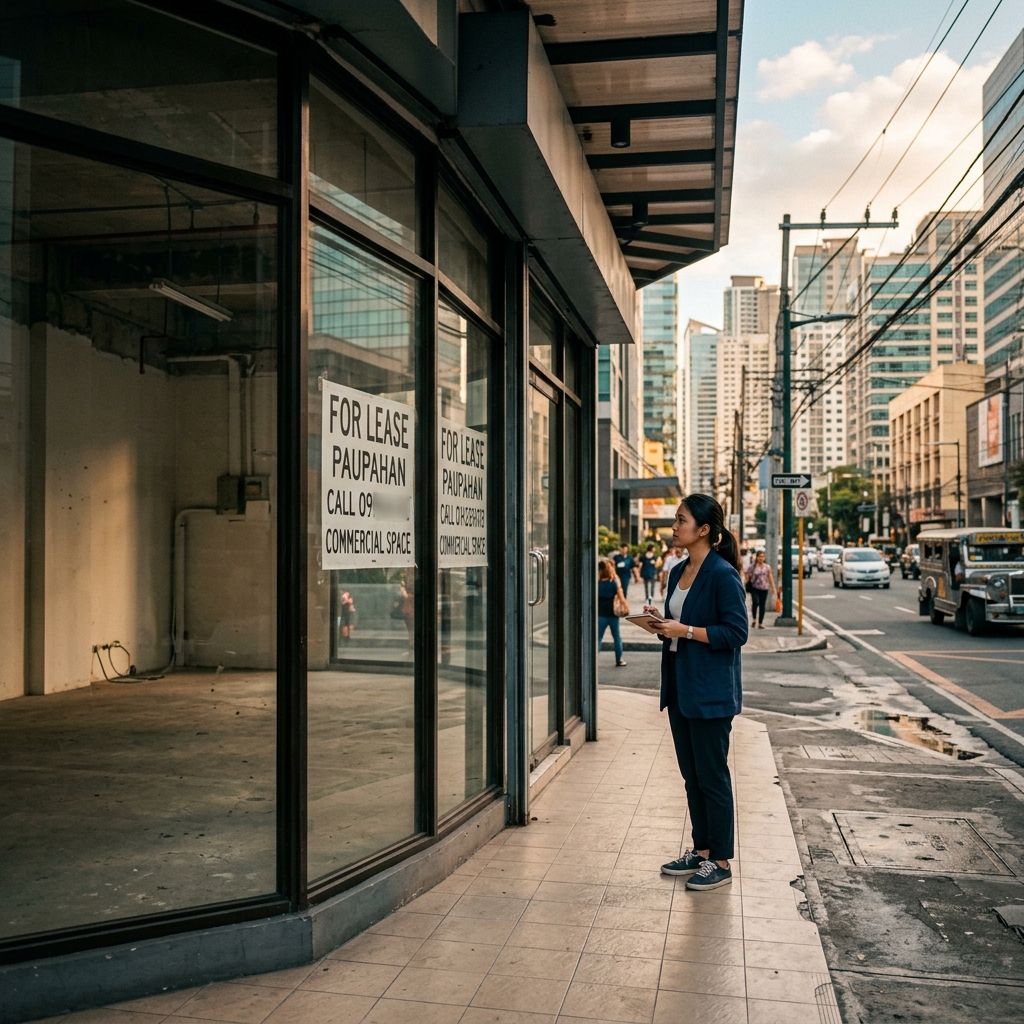
In Metro Manila, the lease is the moment of no return. Between the security deposit, the advance rent, the fit-out, and the months you will pay while ramping up, you are committing hundreds of thousands of pesos before you ring up a single sale — and locking yourself in for years. Get it right and the location quietly carries you. Get it wrong and no amount of hard work makes the math work. Run this reality check before you sign anything.
1. Pressure-test the rent against realistic sales
Prime addresses in Makati, BGC, Ortigas, and the busier parts of QC command serious rent, and landlords quote you the dream scenario. Flip it around: calculate how many customers per day you need just to cover rent, staff, and cost of goods — then ask whether the catchment can deliver that on your slowest day, not your best. If the space only works in a perfect month, it does not work.
2. Check the catchment, not the address
A glamorous address is not a customer base. A BGC corner surrounded by offices empties on weekends; a QC residential strip is the opposite. Match the area's daytime versus residential population — and its income profile — to who actually buys what you sell. The Philippine Statistics Authority publishes detailed population and income data you can use to sanity-check any barangay.
3. Count the competition honestly
Walk two blocks in every direction, not just the one your prospective unit sits on. Count direct competitors and indirect substitutes, and ask the landlord or neighbors what recently closed in the area — a string of closures in the same use is a red flag the catchment cannot support it.
warningRead the lease clauses that trap first-timers
- Escalation: Annual rent increases that outpace your projected growth.
- Lock-in & pre-termination: What it costs to exit if the location underperforms.
- Hidden outgoings: CUSA/association dues, aircon charges, and utilities on top of base rent.
- Fit-out & restoration: Who pays to build out — and to restore the unit when you leave.
4. Match the foot traffic to your hours
Visit the unit at the exact hours you intend to trade, on a normal weekday — not just during your agent's convenient afternoon viewing. A lunch concept needs midday density; a bar needs evening flow. The crowd at the wrong hour is irrelevant to your sales.
5. Get one objective score before emotion takes over
By the time you have visited a space twice and pictured your sign on it, you are emotionally invested — and emotion is how founders talk themselves into bad leases. Before that happens, get a cold, objective read: an opportunity score that weighs catchment, competition, and traffic together, so you have a number to argue against your own optimism (and to negotiate with).
Run the reality check in 60 seconds
Before you sign, drop a pin on the unit in PrimePin and get the catchment demographics, competitor density, traffic read, and an opportunity score with a verdict — plus a downloadable report you can use to negotiate the rent. Start free, no credit card; subscriptions are billed in pesos.
Don't sign that Manila lease blind.
Get the numbers on any unit before you commit. Free, 60 seconds, no credit card required.
Run a Free Location Scan