The Australian CBD Renaissance: Growing Businesses and 2026 Pitfalls to Avoid
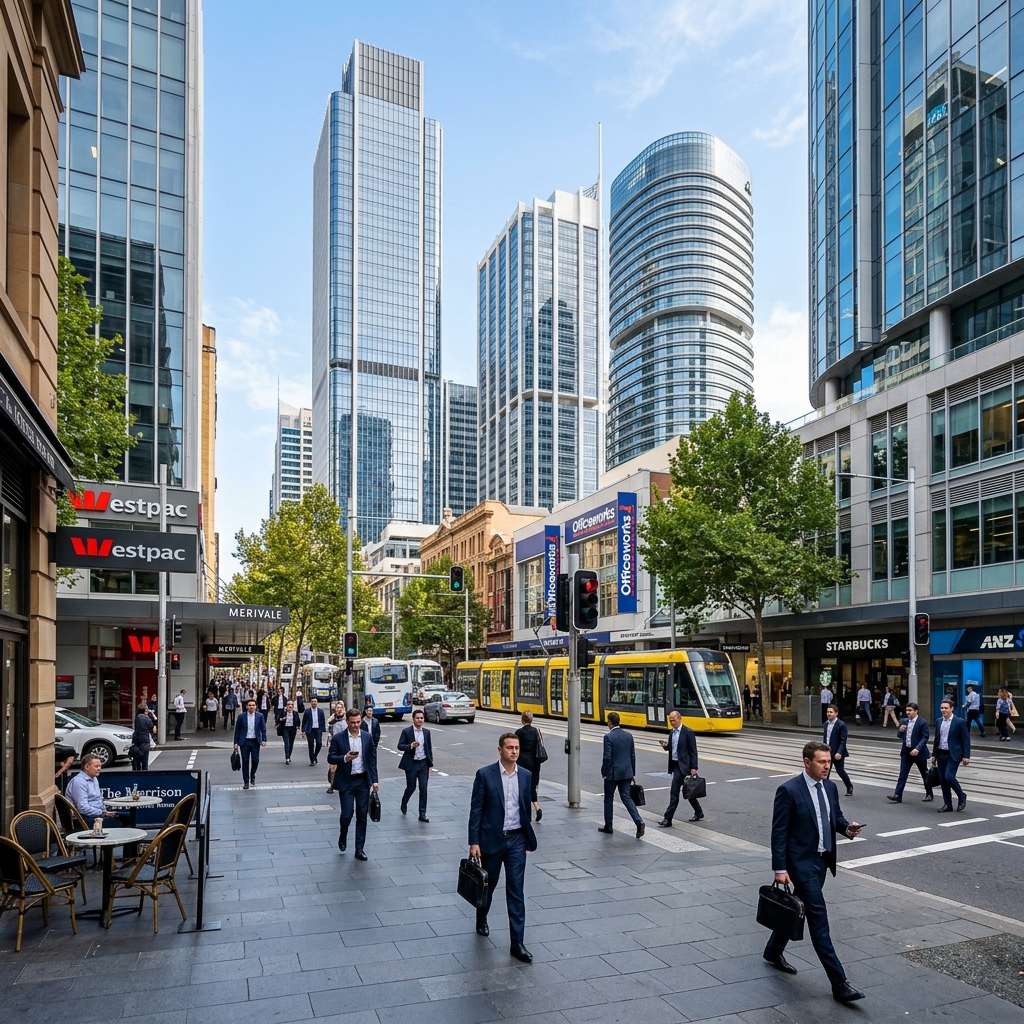
As we cross the mid-year mark of 2026, Australia’s central business districts—particularly in Sydney, Melbourne, and Brisbane—are experiencing a profound structural shift. The "post-hybrid" working era has stabilized, bringing a predictable, slightly modified rhythm of foot traffic back to our city centers. For commercial real estate investors and business owners, understanding this rhythm is the difference between a thriving flagship store and a costly broken lease.
The Growth Vectors: What's Thriving in 2026?
Based on PrimePin's latest mobility and demographic data scans, three specific business archetypes are dramatically outperforming the market average in major Australian CBDs:
- Premium Wellness & Recovery Suites:Gone are the days of the standard 24/7 gym dominating CBD real estate. The fastest-growing segment is high-end wellness—think cryotherapy, infrared saunas, and IV drip lounges. These businesses capitalize on the "lunch-hour biohack" trend, drawing high-income corporate workers who prioritize rapid recovery.
- Specialty Coffee & "Third Space" Hybrid Lounges:While generic cafes are struggling, high-end specialty roasters that transition into premium wine bars after 4 PM are seeing unprecedented yield. They act as essential "third spaces" for remote workers seeking brief in-person collaborations without the formality of a leased office.
- Experiential Retail & Showrooms:E-commerce brands are establishing physical CBD footprints, but not for inventory holding. They are leasing smaller footprints solely for experiential brand immersion and fitting, shipping products directly to the consumer's home.
The Danger Zones: What to Avoid This Year
The stabilization of CBD traffic hasn't been a rising tide that lifts all boats. Several traditional business models are facing severe margin compression and should be approached with extreme caution when signing a lease.
warningHigh-Risk Archetypes
- Generic Fast-Casual Dining: The "grab-and-go" sandwich and salad market is saturated. Without a massive brand differentiator, foot traffic alone is no longer converting into enough transactions to cover premium CBD lease rates.
- Large-Format Traditional Retail: Expansive floor plans dedicated to holding massive inventory are bleeding cash. Consumers prefer to browse small, curated collections and buy online.
- Secondary Transit Corridors: Rents on streets that are one block removed from primary transit hubs (like Wynyard or Flinders Street) have not adjusted downward enough to reflect the steep drop-off in pedestrian spillover.
The Feasibility Mandate
If there is one lesson from the first half of 2026, it is that visual observation is deceptive. A crowded street at 12:30 PM does not equate to a profitable retail environment if the pedestrian intent does not align with your business model.
Before signing a 3-to-5 year commercial lease, conducting a rigorous feasibility study using real-time mobility data is no longer an optional luxury—it is a baseline requirement for survival. By understanding the exact demographic breakdown, competitor density, and transit friction of a specific address, you can avoid the traps and capitalize on the true growth sectors of the modern Australian CBD.
Don't guess on your next location.
Use PrimePin's institutional-grade intelligence engine to get a definitive feasibility score in 60 seconds.
Run a Free Location Scan